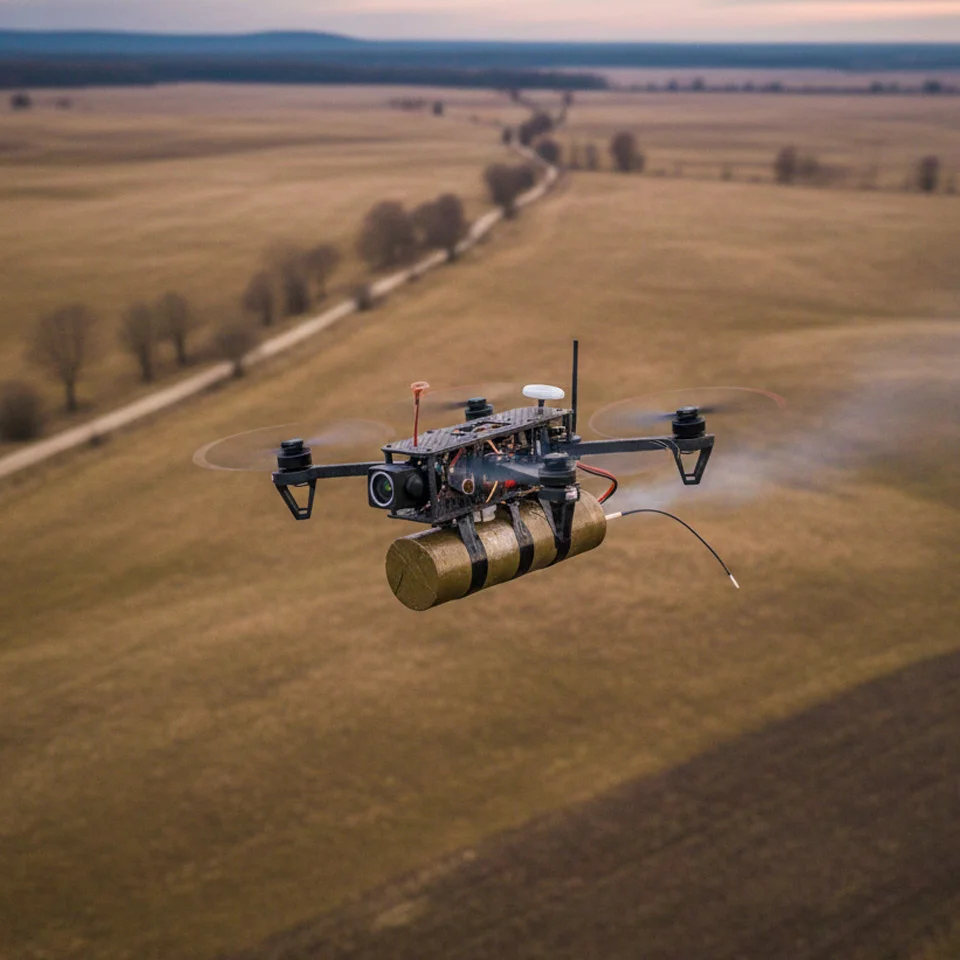
FPV's: The Great Battlefield Equalizer
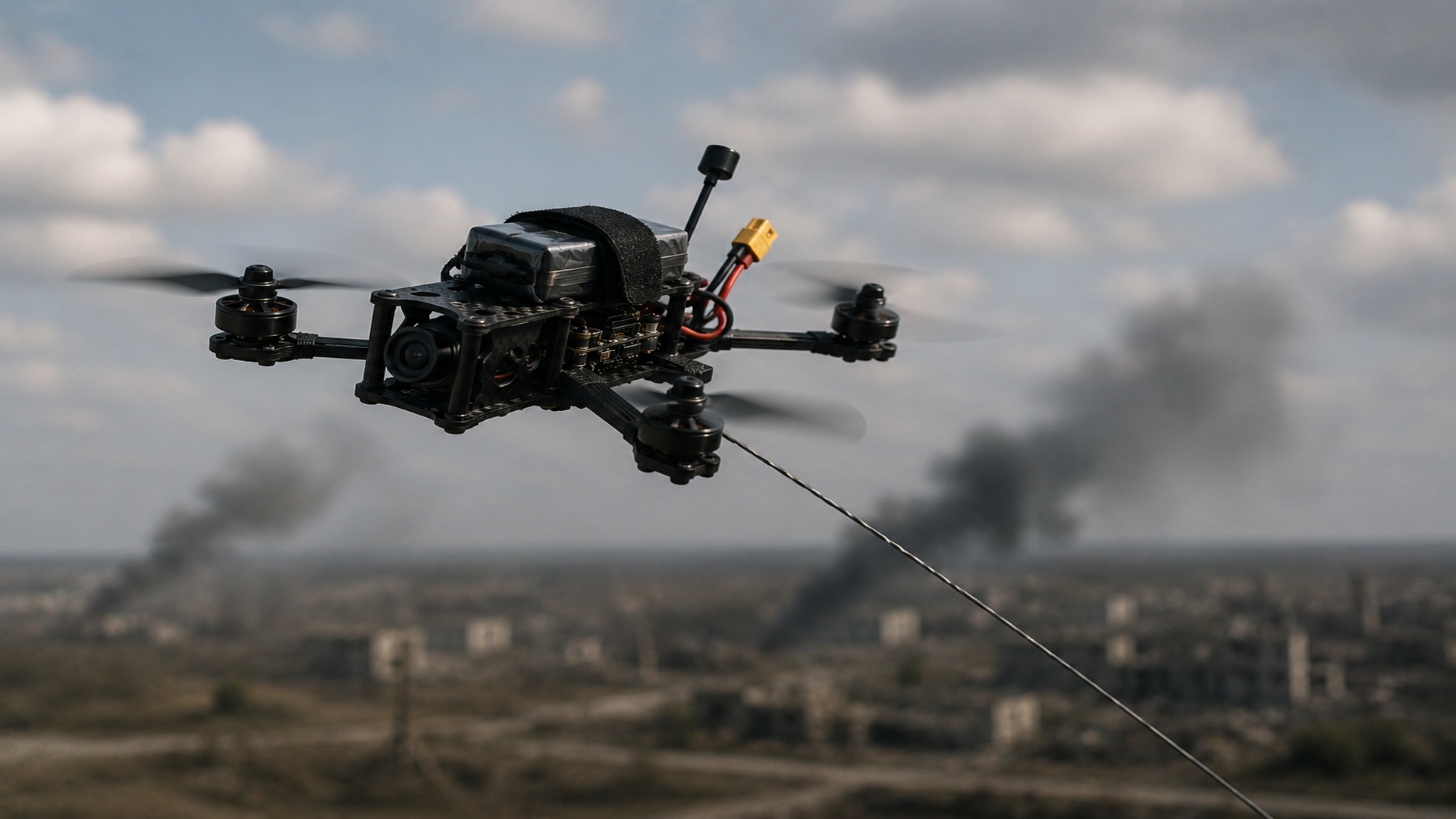
"A $3,000 drone is reshaping the economics of modern ground warfare."
Every conflict eventually becomes a land grab. Air campaigns soften the ground, degrade infrastructure, and establish dominance above the battlespace. But territory is taken and held by forces on the ground. And right now, the ground fight has a new gatekeeper.
A trained FPV drone team with $1,000 to $3,000 platforms is denying movement to forces backed by billions in conventional capability.
The Fiber Optic Evolution
Hezbollah is proving this against the IDF in real time, employing the same tactics that emerged from the Russia-Ukraine conflict but with a critical evolution: fiber optic tether lines. The drone operator connects to the FPV through a thin fiber optic cable instead of a radio frequency link. The result is a drone that cannot be jammed, cannot be spoofed, and cannot be detected through its emissions. Electronic warfare, the primary counter-drone tool in every modern military's arsenal, becomes irrelevant against a platform that never transmits a signal.
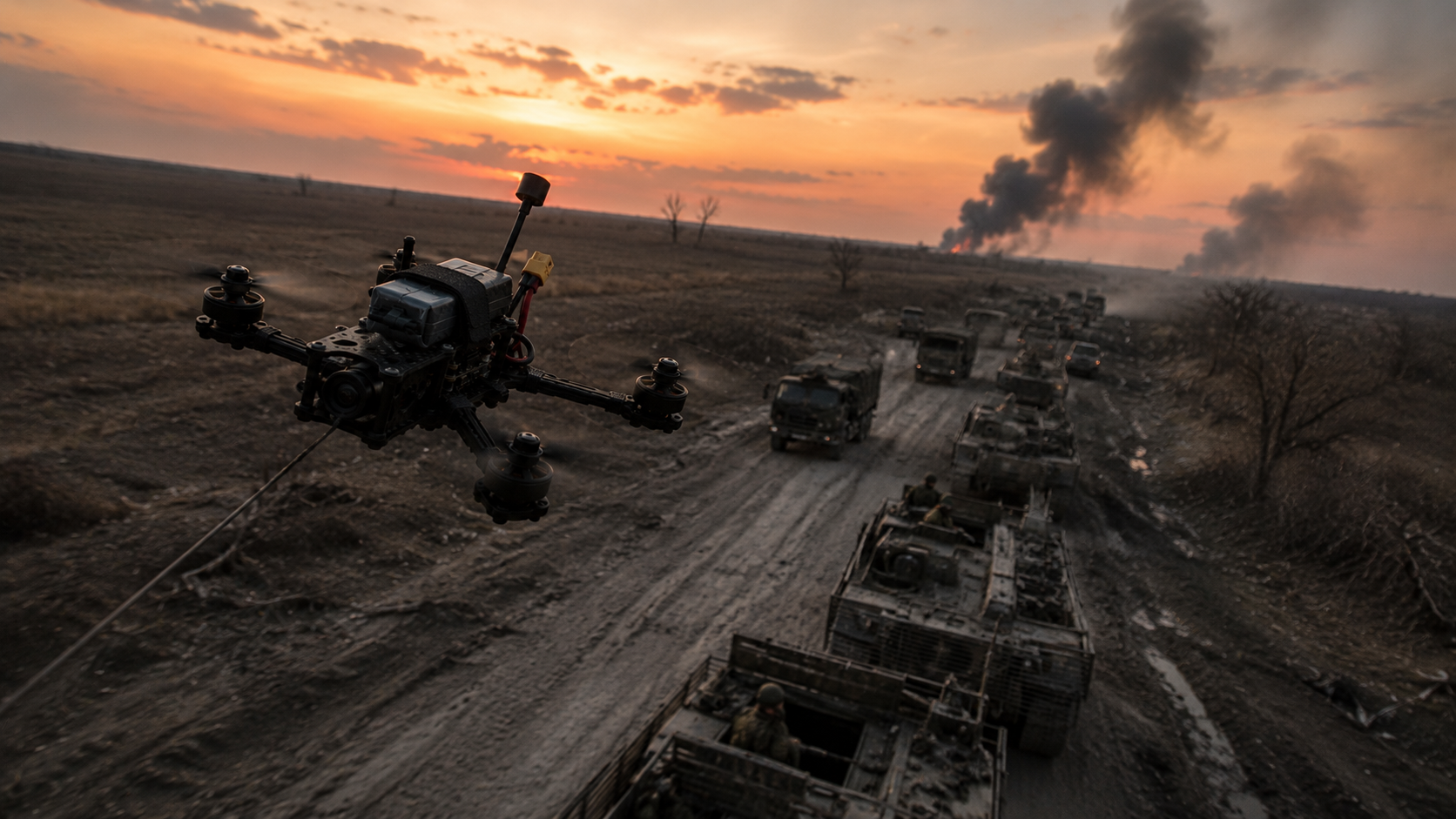
The tactical application is devastating. Small drone units, operating from concealed positions, are targeting troop movements, armored vehicles, supply convoys, and staging areas with precision strikes that cost almost nothing to execute. Drone swarms are being coordinated to saturate an area, forcing advancing troops to stop, disperse, or retreat. The advancing force has to solve the drone problem before it can move. And right now, the drone problem does not have a scalable solution.
The Economics of Attrition
This is the equalizer. A state-of-the-art main battle tank costs $10 million. The FPV that disables it costs $3,000. A squad of soldiers trained for years can be pinned and denied movement by a single drone operator who trained for weeks. The economics of attrition have fundamentally shifted, and every military in the world needs to internalize what that means for ground operations.
What we are seeing in Lebanon mirrors what the Russia-Ukraine conflict demonstrated at scale. FPV drones are not a nuisance. They are a primary weapons system that shapes the battlefield at the tactical level. Forces that do not account for the FPV threat in their ground maneuver planning will not advance. Period.
How Avyon Is Responding
At Avyon Consulting Group, our National Readiness Lab captures and studies these battlefield scenarios through CTIRS, our Combat Threat Intelligence and Response System. We analyze real-world drone engagements, troop movement disruption patterns, swarm coordination tactics, and counter-drone evasion techniques, converting operational footage into machine-readable adversary behavior libraries. FPVs have already changed warfare. Our job is making sure autonomous systems, counter-drone defenses, and ground maneuver doctrine account for what a $3,000 drone with a fiber optic line can do to a $10 billion ground operation.
We study this so the warfighter doesn't have to learn it the hard way.